Why Continuing Education Matters in Home Birth Midwifery
When families ask about my background as a midwife, they are often trying to understand what training I have, what qualifies me to provide home birth care, and what happens behind the scenes to help me stay prepared. Those are completely reasonable questions, especially because out-of-hospital midwifery is still unfamiliar to many people.
I am a certified nurse midwife, which means I was a nurse first. I worked as a labor and delivery nurse, then went back to school to become a nurse midwife. With that license, I could have chosen to work in a hospital, a birth center, or a home birth setting. Most certified nurse midwives do practice in hospitals, and for a long time, that was where I assumed I would end up too.
My path changed gradually. After having my second baby in the hospital, I took some time to think about what kind of work felt most aligned for me. I started focusing more on childbirth education, worked as a doula, and supported families more individually. After having my third baby at home, I decided to begin my own home birth practice.
My education and hospital experience gave me a strong clinical foundation. They taught me how to assess labor, recognize complications, communicate with a medical team, and care for families through a wide range of birth experiences. At the same time, one thing I have come to understand more deeply through this work is that becoming qualified is only the beginning.
Birth work requires ongoing learning.
Certified Nurse Midwife Qualifications Are the Foundation
When someone searches for certified nurse midwife qualifications, they are usually looking for reassurance that their provider has received midwifery education and clinical training. That matters. Credentials, licensure, and formal education give families an important starting point when they are choosing a provider.
But a certification does not mean someone has finished learning. Birth changes quickly. Evidence changes. Recommendations evolve. Skills that are not used frequently still need to be practiced. Situations that may be rare still require preparation.
In a small home birth practice, I am not seeing every possible scenario every week. I may not need to perform certain emergency skills often, which is exactly why I need to intentionally revisit them. It would not be responsible to assume that because I learned something during training, I never need to practice it again.
That is where continuing education becomes such an important part of this work.
What continuing education looks like
For me, midwife continuing education includes renewing certifications, practicing emergency skills, learning from other midwives, and taking classes that strengthen areas I may not encounter regularly. That can include neonatal resuscitation, breech birth education, emergency response skills, suturing classes, and other hands-on clinical training.
Some of those skills may never be needed at a birth. Others may be needed unexpectedly. Either way, I want them to feel familiar enough that I can think clearly if the situation arises.
Home Birth Safety Training Happens Before Labor Begins
A lot of what people see when they think about midwifery is the actual birth. They picture the midwife arriving at the house, listening to the baby, supporting labor, and being present when the baby is born.
That is only one part of the work.
Home birth safety training happens long before labor begins. It happens in certification courses, skills workshops, emergency drills, peer discussions, case reviews, and the quiet time spent going back through evidence and protocols. It also happens during prenatal care, when I am gathering information, assessing risk, discussing transfer planning, and trying to understand what is normal for that particular client.
Preparation starts in pregnancy
By the time I arrive at a birth, I already know a great deal about the family, the pregnancy, the baby, and the plans we have discussed together. We have already talked through what supplies need to be available, what the transfer plan would look like, who will be present, and what kinds of situations might change the original plan.
I also continue to prepare on my own. I renew my neonatal resuscitation training. I practice emergency scenarios. I review skills that I may not use every month. I seek out education around breech birth and other less common situations. I learn alongside other midwives and students in the area because there is always value in hearing how someone else thinks through a case or approaches a skill.
That kind of preparation is not very visible, but it is a significant part of responsible home birth practice.
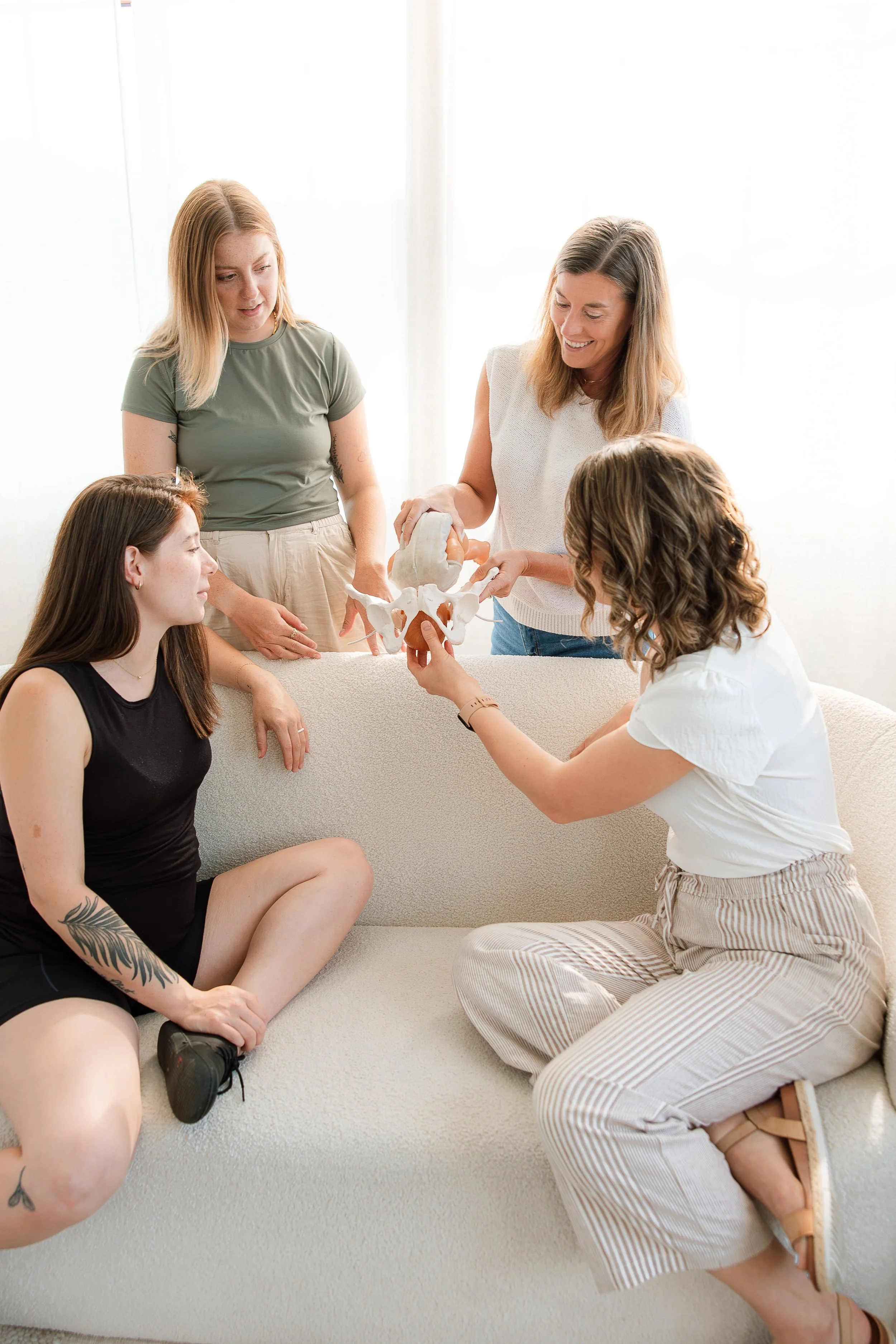
Ongoing Learning and Collaboration
One of the things I value most in this work is being able to learn from other birth professionals. Home birth can sometimes look very independent from the outside, especially for someone like me who owns a small practice, but I do not see this as work that should happen in isolation.
There is so much value in collaboration. Other midwives may have encountered situations I have not yet seen. A student may ask a question that makes everyone slow down and think more carefully. A doula may notice something about the emotional environment that adds another layer to the conversation. A hospital-based provider may bring experience with a medical complication that is important to understand more deeply.
Continuing education is not only about collecting certificates or attending required classes. It is also about staying open to the fact that there is always more to learn.
Birth can be unpredictable. Even when prenatal care has been thorough and the pregnancy has remained low risk, labor does not always follow a neat plan. The work requires clinical judgment, but clinical judgment is not something that becomes complete at graduation. It grows through experience, reflection, discussion, and repeated practice.
I think humility is an important part of safety. A provider should be confident enough to make decisions, but also willing to ask questions, consult with others, and recognize the limits of their own experience.
Rare Skills Still Need Regular Practice
Some parts of midwifery care happen all the time. I listen to fetal heart tones, assess vital signs, monitor labor progress, support postpartum recovery, and examine newborns regularly.
Other skills are needed much less often.
That does not make them less important.
In fact, the less often a skill is used, the more intentional the practice needs to be. Neonatal resuscitation is a clear example. Most babies transition normally and do not need resuscitation, but I still renew that training and practice the steps because if a baby does need help, that is not the moment to be trying to remember something I have not reviewed in years.
The same is true for other emergency skills. Some situations are uncommon, especially in a carefully screened home birth practice, but uncommon is not the same as impossible. Home birth safety training means preparing for the situations we hope do not happen, while also making thoughtful decisions about when home birth remains appropriate and when a higher level of care is needed.
That preparation includes equipment, skills, judgment, communication, and transfer planning. None of those pieces stand alone.
Knowing is different from practicing
I also think there is a difference between knowing a skill in theory and practicing it with your hands. Reading about suturing is different from taking a suturing class. Reviewing an emergency protocol is different from physically working through the steps with other providers. That hands-on repetition helps build familiarity, and familiarity can help reduce hesitation when the situation is stressful.
Behind the Scenes, the Schedule Is Always Shifting
The practical reality is that continuing education has to be worked into an already unpredictable schedule.
I take about two, sometimes three, home birth clients with due dates in a month. That number allows me to balance the on-call nature of birth work with my family and with the other responsibilities involved in running my practice. Even with a smaller client load, babies do not always arrive in the month they are due. One client may go late while another goes early, and the schedule can change very quickly.
Alongside prenatal appointments, home visits, births, postpartum care, charting, administrative work, and coordinating families with the doulas on our team, I also have to make time for training. Sometimes that means attending a class during the day. Sometimes it means meeting with other midwives to practice skills. Sometimes it means reviewing materials or completing education after my kids go to bed.
The work is rarely arranged in a perfectly predictable way. I am someone who really likes structure and likes to know what is coming, but birth has taught me that there is only so much control. Motherhood has taught me that too.
There are weeks when everything goes according to plan, and there are weeks when a birth, a client need, or an unexpected opportunity changes the schedule. Continuing education still has to remain part of the work, even when it has to be fit into a life that already has many moving parts.

Preparation Is Part of the Care Families Receive
When a family hires a home birth midwife, they are not only hiring the person they see at prenatal visits or the person who will attend their birth. They are also relying on the work that happens outside those appointments.
They are relying on the time spent maintaining certifications, reviewing evidence, practicing emergency skills, and learning alongside other providers. They are relying on the judgment that comes from hospital experience, home birth experience, and continued reflection. They are relying on a provider who is willing to keep strengthening the parts of the work that may not be visible.
I do not think families need a provider who knows everything. I think they need someone who has a strong foundation, understands their scope, continues learning, and takes preparation seriously.
Ongoing midwife continuing education is not separate from client care. It is one of the ways I care for clients before I ever step into their home for a birth.
If you are considering home birth in the Milwaukee or Waukesha area and want to learn more about my training, experience, approach to safety, or what care through Family Focused Midwifery looks like, I would be happy to talk with you.
A consultation is a chance to ask questions, learn more about the home birth process, and decide whether this model of care feels like the right fit for your family.
Family Focused Midwifery supports families throughout Milwaukee, Waukesha County, and Southeast Wisconsin with home birth midwifery care, birth doula support, and childbirth education.
If you're looking for personalized support, we're here to help you navigate pregnancy, birth, and postpartum with confidence.
Not local? You can still learn with us through Fearless Birth Academy, our online childbirth education program.
You don’t have to figure this out alone, and you don’t have to choose between safety and autonomy.