Can You Switch Providers During Pregnancy? When Your Care No Longer Feels Like the Right Fit
Can You Switch Providers During Pregnancy?
Some families start pregnancy feeling confident about their provider and birth plan. Then somewhere along the way, they begin to wonder if their care still feels like the right fit.
That does not always happen all at once. Sometimes it happens slowly. Maybe after an appointment where they felt rushed. Maybe after being told there was only one option. Maybe after asking a question and feeling like there was not really time to talk through the answer. Maybe after realizing they wanted something more individualized than what their current care structure could offer.
One of the questions I hear fairly often is:
"Can I switch providers during pregnancy?"
The answer is yes.
And sometimes exploring that question leads people toward a different OB, a different midwife, additional doula support, or even a completely different birth setting. But more often than not, the conversation starts because something no longer feels aligned.
As a home birth midwife who initially trained in the hospital, I do feel like I have a good perspective on both sides of this. I understand the structure of clinic care. Providers are often seeing many clients throughout the day, sometimes 15 or more, and those visits may include prenatal visits, postpartum visits, wellness visits, and everything else all within the same schedule.
That kind of schedule can make it difficult to give individualized care, really listen, and take the time that every person needs or wants. Not because the provider does not care. The structure itself can make it hard.
A lot of times when I have a transfer of care, it is because someone is looking for more time, more conversation, and more space to understand what they actually want in their birth experience.

When Care Starts to Feel Less Individualized
Some of the families I meet are not necessarily unhappy with everything about their care. They may like their provider. They may still be considering the same birth setting they originally planned. But something has started to feel a little off.
Sometimes they were told they could only ask a limited number of questions during a visit. Sometimes they were given one option and told it was required. Sometimes they were told there were no alternatives, or that a certain alternative would not be supported.
I have heard families talk about being told they should be induced at 39 weeks because "nothing good happens after 39 weeks." I have heard people describe feeling like they were being made to believe they were higher risk without really understanding why. I have heard people say they were told they could not refuse or decline something because "all clients are required to do XYZ."
And when the choices no longer feel like they belong to the mother or the family, and the care no longer feels connected to their values or what they want in their experience, that is often when people start searching elsewhere.
Sometimes that search leads them to home birth. Sometimes it leads them to a different hospital provider. Sometimes it leads them to midwifery care in another setting. Sometimes it leads them to additional supportwhile staying with their current OB or midwife.
There is not one single path that makes sense for every family.
Sometimes Families Want More Support, Not a Different Birth Setting
One thing I really enjoy is helping people figure out what kind of support they are actually looking for.
For some families, the answer is not changing their entire birth plan. They may still want a hospital birth, but they want more help advocating for themselves. They want someone to talk through options with. They want additional prenatal support. They want more time to think about what they want before they are in the middle of making decisions.
That is where doula support can be really helpful.
I meet with a lot of our doula clients for one or more prenatal visits, and sometimes postpartum too, to help bridge that gap between adequate prenatal care and actually having the time to listen, individualize care, and give families space to ask questions.
I have had countless times where people come into my office without a single question.
And then we end up talking for an hour.
The full hour is talking about all the questions they have. They just needed some time and space to develop those questions. They needed to think about what they wanted in real time, in front of somebody, and talk through some of the things going on in their brain.
I really enjoy that part. Seeing people's brains unfold. Watching them start to really engage in their care.
That is one of the differences that can happen when visits are longer and when there is a relationship there.
The Desire to Feel Known
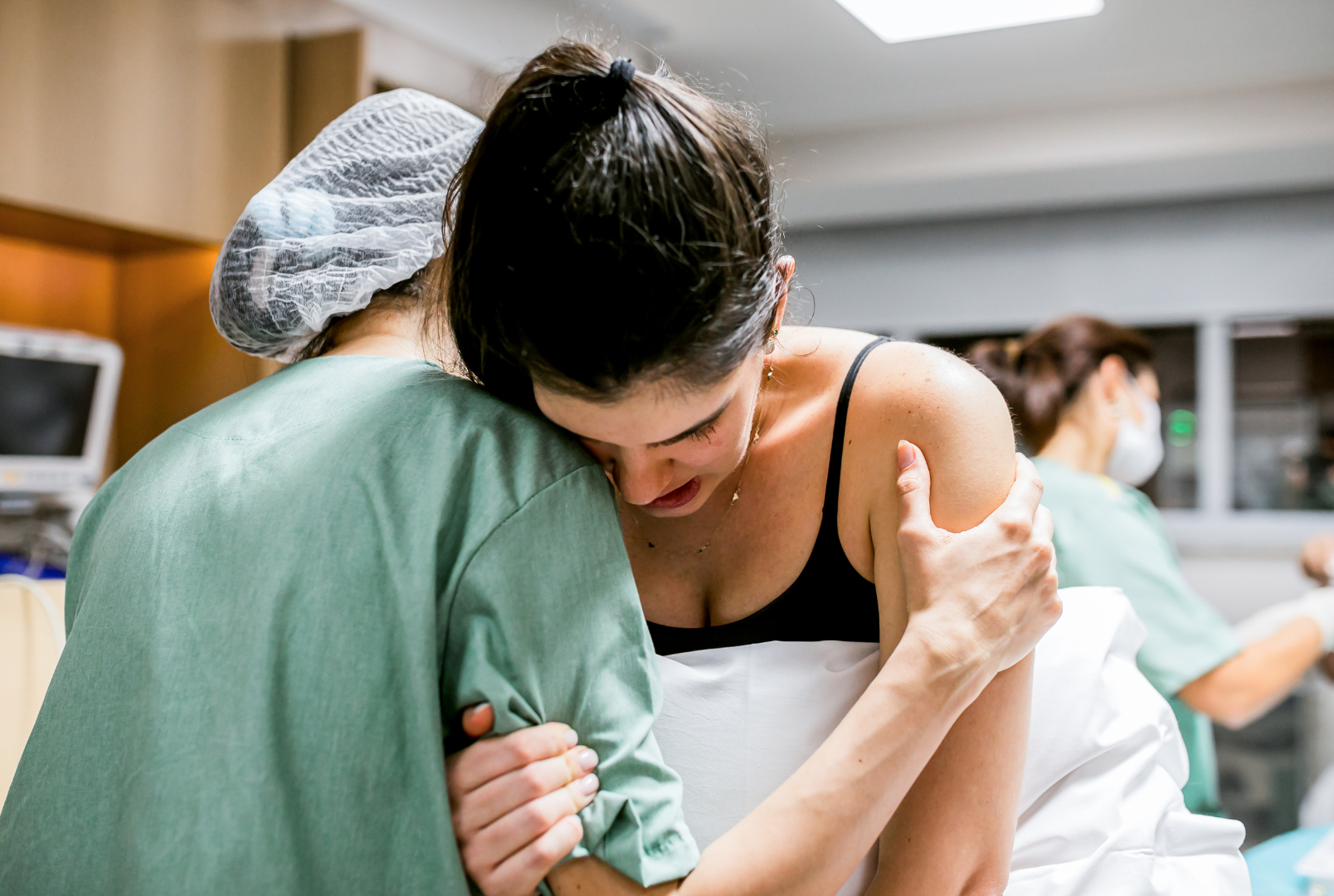
Another big thing I hear is that clients do not always like seeing a different provider every time.
And I can understand why practices do it. If several providers share a call schedule, it can make sense for families to meet the different people who may potentially be at their birth.
But there can also be something missing when there is no continuity of care. When you do not consistently see the person you really like, the person you trust, the person who knows you well.
Care can start to feel split up into pieces. One appointment with one person. Another appointment with someone else. A conversation started one week that does not necessarily continue the next. It can feel distant from the kind of intimate provider relationship some families are looking for during pregnancy and birth.
For some people, that is one of the things that makes them start thinking there may be another option.
Sometimes that option is continuing with their OB or hospital midwife and adding more support. Sometimes it is changing providers. Sometimes it is exploring home birth. Sometimes it is simply sitting down and talking through what feels missing before making any decisions.
When Families Start Exploring Other Options
When someone starts questioning whether their current provider relationship is the right fit, there are often several possible paths forward.
Part of that conversation is understanding their experience so far. What has felt supportive? What has not? What are they hoping for? What are they trying to avoid? What do they want their care to feel like?
Sometimes that leads to a different provider within the same birth setting. Sometimes it leads to additional support through doula care or birth education. Sometimes it leads to exploring home birth.
And part of that conversation is also understanding risk.
Just because someone wants a home birth does not automatically mean they are a great candidate for home birth. There may be a medical condition that changes the conversation. There may be other factors that need to be considered. There is also the question of preparation, responsibility, and accountability on the family's part.
Home birth takes investment. It takes preparation. It takes a willingness to participate in care, ask questions, make decisions, and help minimize risk where possible.
That is not meant to scare people away from home birth. It is simply part of the conversation.
Home birth is not about convincing every person to birth at home. It is about helping families understand whether it is an appropriate and safe option for them.

The Conversation Usually Comes First
Most of the time, when families begin considering changing providers during pregnancy, the first step is not making a final decision. It is a conversation.
A conversation about what they are experiencing in their current care.
A conversation about what they want.
A conversation about what support they feel like they are missing.
A conversation about whether a different provider relationship would feel like a better fit.
A conversation about whether additional support, like doula care or birth education, may be enough.
I think that is one of the most important pieces. Families do not have to knowexactly what they want before they reach out. Sometimes they just know something does not feel aligned anymore. Sometimes they know they want more time. Sometimes they know they want to feel more involved in their care. Sometimes they are not sure what they want yet, but they want to talk it through.
And that is a very reasonable place to begin.
If you are wondering whether your current provider is the right fit, or if you have been thinking about changing providers during pregnancy, Family Focused Midwifery would be happy to have a conversation with you.
Whether you are exploring home birth midwifery care, doula support, birth education, or simply trying to understand your options, we can help you talk through what feels missing and what support may be the best fit for your pregnancy and birth.
Family Focused Midwifery supports families throughout Milwaukee, Waukesha County, and Southeast Wisconsin with home birth midwifery care, birth doula support, and childbirth education.
If you're looking for personalized support, we're here to help you navigate pregnancy, birth, and postpartum with confidence.
Not local? You can still learn with us through Fearless Birth Academy, our online childbirth education program.
You don’t have to figure this out alone, and you don’t have to choose between safety and autonomy.