My Traumatic Birth Experience and What I’d Change Now as a Midwife
My story begins with a traumatic birth
One that was chaotic, rushed, and filled with interventions I didn’t understand.
And while that traumatic birth ultimately led me to where I am today as a midwife, I now know there were so many moments that could have been handled differently: with more compassion, more autonomy, and far more informed choice.
By the end of this post, you’ll understand the key decisions that help families avoid a traumatic birth experience and what truly creates an empowered hospital birth.

You’re Not Alone if Your First Birth Didn’t Go as Planned
If you're preparing for your first hospital birth or hoping for a very different experience than your last, you might carry fears about losing control, being pressured into interventions, or repeating a traumatic birth that left you feeling unseen or unheard.
These fears are valid.
And far more common than most women realize.
Your desire for a safer, calmer, more informed birth isn’t coming from a place of fearfulness. It’s coming from wisdom. It’s coming from experience. And your next birth story deserves to reflect that wisdom.
My Own Traumatic Birth
What Actually Happened.
Before I became a midwife, I was a pregnant nursing student juggling classes and clinicals. I decided to attend an eight-hour hospital birth course that covered logistics like where to go, when to call triage, and how to time contractions. It didn't mention anything about my rights, my options, or how birth actually unfolds.
During a routine checkup at 39 weeks, I was shocked to learn I was 6-7 centimeters dilated without feeling a single contraction. Instead of an informed conversation presenting what was happening or my options, I was rushed to labor and delivery. And from that moment on, I gave up my autonomy
An IV was inserted.
Continuous monitors were attached.
A provider broke my water without explaining any of the potential risks, alternatives, or the option to decline.
My contractions immediately became so intense, which I had not expected.
Every decision was made for me instead of with me.
Looking back now as a midwife, I can confidently say:
My traumatic birth could have been prevented.
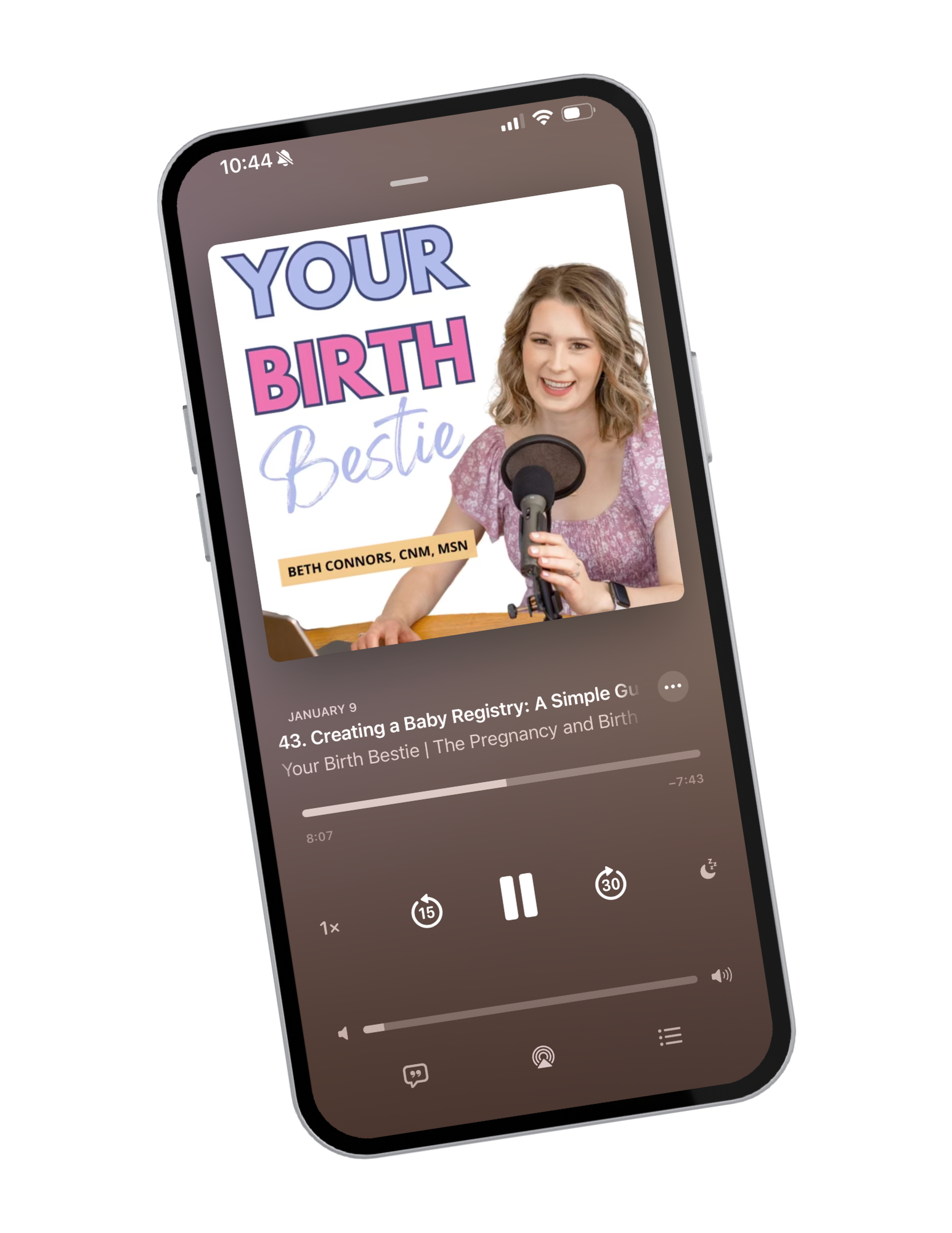
Inside Episode 2 of Your Birth Bestie podcast, I share the full emotional and physical whirlwind. How pressure, fear, and lack of informed consent shaped the entire experience.
What I Would Change Now as a Midwife
These are not just reflections.
They are the lessons I now teach the families I serve so they never feel powerless or blindsided the way I did.
1. I Would Not Have Been Admitted So Early
At 6–7 cm without contractions, I wasn’t walking around in active labor. Dilation without a labor pattern is simply information, not a medical emergency.
But early admission triggered a cascade of interventions that escalated into a traumatic birth.
You don't have to be admitted against your will. It's an opportunity for a conversation, and your provider will provide their recommendation. It's not the law.
2. I Would Have Asked for Full Informed Consent Before Breaking My Water
Not long after admission, a provider suggested breaking my water “to speed things up.” I didn’t know the risks, the alternatives, or how dramatically it would intensify labor.
As soon as it happened, my contractions became so intense.
Before any intervention, ask:
What are the benefits?
What are the risks?
What are the alternatives?
What happens if I wait?
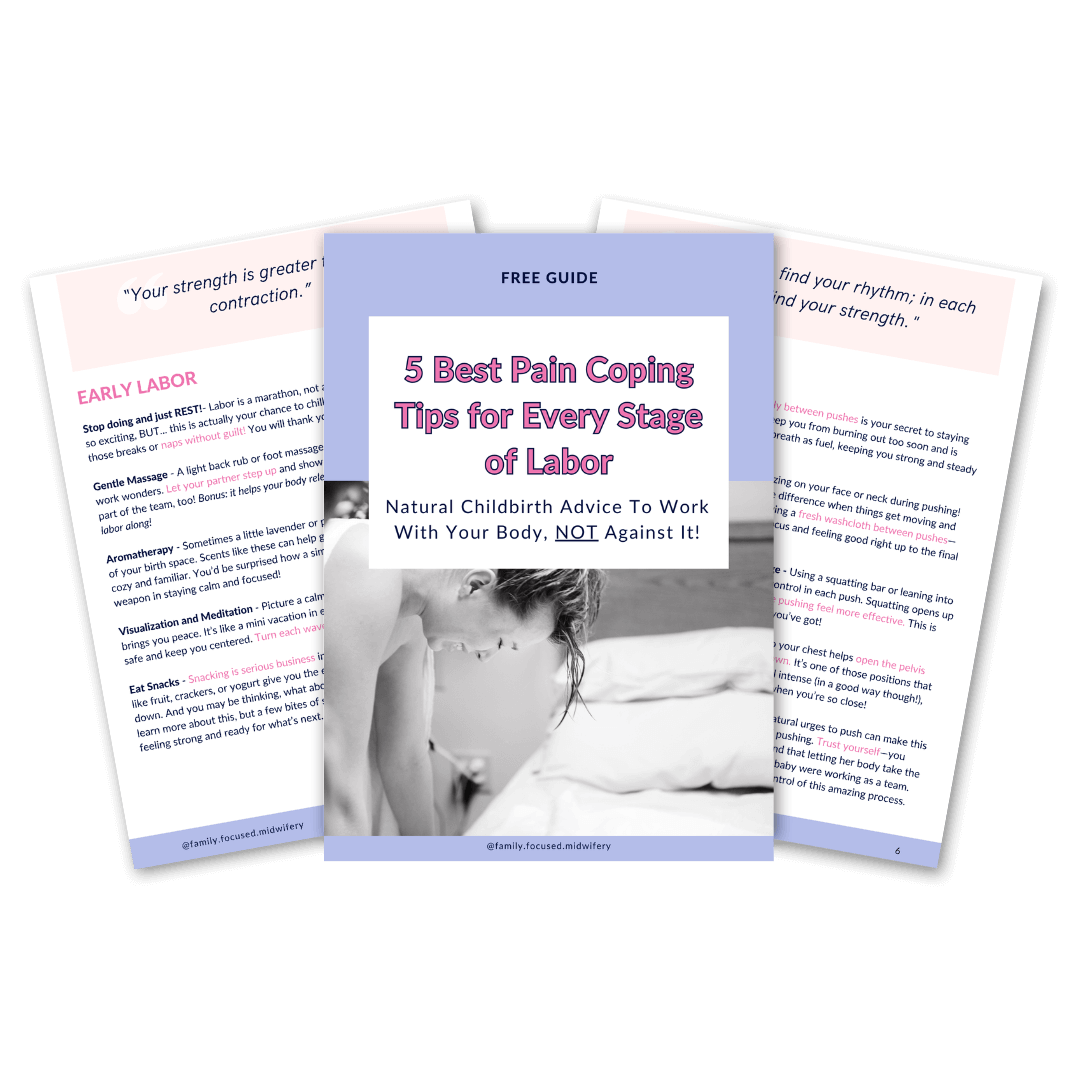
These questions can prevent a traumatic birth experience because you're putting yourself back in the driver's seat. This is the exact reason I created my Rainbow Guide, to help you in the process of making informed decisions.
3. I Would Have Moved and Pushed in Positions That Worked for My Body
I pushed for four exhausting hours, unmedicated on my back while my body was begging for hands-and-knees or side-lying positions. I was coached loudly, constantly, and without regard for my own instincts.
Movement is medicine.
You deserve to push in whatever position feels right for you!
4. I Would Have Asked More Questions Before Agreeing to a Vacuum Delivery
After hours of coached pushing, I was told I needed either a vacuum delivery or a C-section. I was exhausted and overwhelmed, so I agreed immediately. But it wasn't an emergency... I simply "ran out of time" per the hospital policy.
The room filled with staff. The urgency escalated.
My daughter was born quickly and immediately whisked away.
She was completely healthy, yet I didn’t see her for an entire hour while they stitched me back together.
It felt like my birth was happening to me, not with me.
You can always ask for:
More time
More explanation
More options
A moment to pause and breathe
These pauses alone can reduce the likelihood of a traumatic birth.
Lessons I’ve Learned
How to Avoid a Traumatic Birth
I don’t share my story to frighten you. I share it to empower you.
Everything I learned through my own traumatic birth is what I now want you to carry confidently into yours.
1. Know Your Rights and Options
Informed consent is your right, not a favor.
2. Build a Supportive, Evidence-Based Birth Team
Choose providers who treat you as a partner, not a problem to solve.
3. Always Ask About Alternatives
There is almost always another way. Then you get to decide!
4. Trust Your Body
Your instincts are powerful, primal, and biologically designed for birth.
5. Remember: You Are the Decision-Maker
This is no “allow” or “not allow.” It’s all ultimately your choice.


You Deserve a Birth Rooted in Respect, Safety, and True Autonomy
A traumatic birth can shake your confidence, but it does not define your story.
With compassionate, evidence-based support and someone who truly advocates for your autonomy, your next birth can feel completely different: calm, grounded, informed, and deeply empowering.
If you're planning a hospital birth and want the guidance of a midwife who honors your voice and walks with you through every decision, I’d love to support your journey.
You deserve a birth experience that feels safe, sacred, and truly yours.